




What is buyer enablement?
Buyer enablement refers to the sales strategy providing prospects with the information, tools, and support needed to make an informed purchasing decision. It's a modern concept developed to tackle the challenges of the digital sales cycle.
Previously, sellers met potential customers through face-to-face interactions. The seller's charisma, technique, and knowledge worked to help close the deal. Selling was a skill you could learn. The better at it you were the higher your conversion rate.
However, accelerated by the pandemic, the sales cycle has shifted online, reducing these in-person touchpoints. Today, the average business buying group involves six to ten stakeholders reading blog posts, eBooks, and guides to get a handle on the situation. When they eventually contact a sales rep – after climbing through mountains of information – it's late in the sales cycle.
Little wonder then that 74% of sellers say their role has become less transactional and more consultative. B2B buyers want helpful advisors, not hard sellers.
So, what is customer enablement? It's a sales strategy tailored to the modern business buyer and the digital sales cycle. It gives buyers the freedom to research and read the content provided by the seller, to ask questions when necessary, and to take their time to reach a decision internally.
Buyer enablement is about making it easier for buyers to buy, which includes:
- Detailed product information, comparisons, and specifications.
- Self-service tools such as configurators, pricing calculators, and FAQs.
- Educational content that helps solve problems or address needs specific to the buyer's context.
- Easy access to support and sales teams for personalised assistance.
While sales enablement equips sales teams to sell more effectively, buyer enablement focuses on making the buying process as easy and informed as possible for the customer.
Tools for effective buyer enablement
Effective buyer enablement depends on providing prospective buyers with the resources needed to navigate the decision-making process confidently and efficiently. With the right tools and templates, companies can facilitate a smoother buying journey, reducing friction and helping customers make informed decisions.
The secret to speeding up sales cycles and boosting your conversion rate is a toolkit that educates customers, facilitates communications, and helps forge a strong relationship early in the buyer's journey. We recommend the following customer enablement tools:
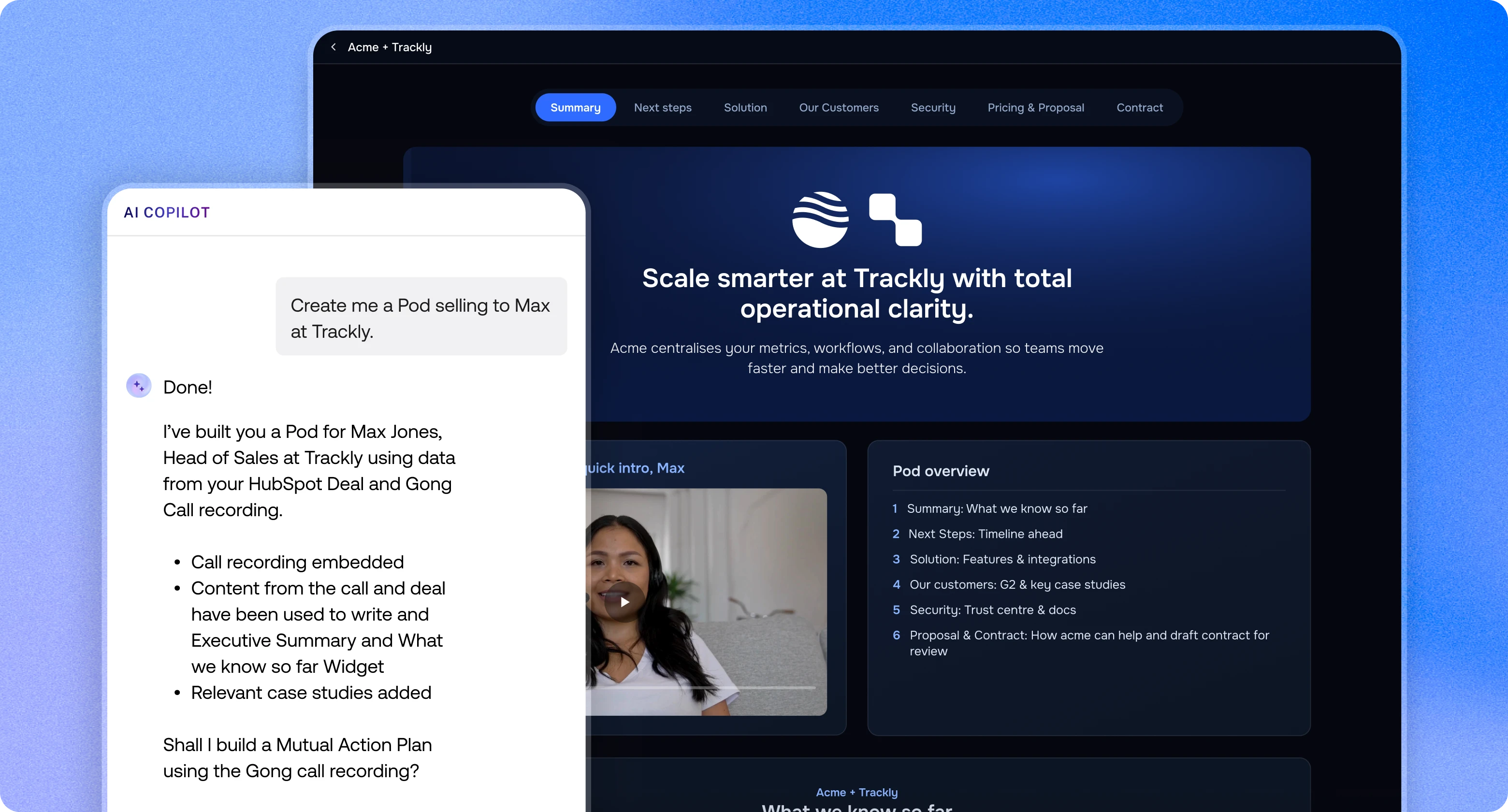
- trumpet: The AI buyer-facing execution layer, combining enablement, collaboration, insights and action in one shared workspace throughout the deal and customer journey.
Teams can create personalised Pods containing relevant content, Mutual Action Plans, proposals, buyer resources and next steps, while Signals show how stakeholders are engaging between meetings. Copilot is the AI assistant that does the heavy lifting, helping teams create and update personalised Pods, while Canvas lets you vibe code interactive, branded Widgets using plain language. From ROI calculators and pricing displays to onboarding plans and FAQs, teams can build the tools and content their deals need without writing code.
- HubSpot Sales Hub: A CRM and sales platform that helps teams manage contacts, pipelines, outreach, meetings and sales activity. Used alongside buyer-facing tools, it can help teams keep customer and deal information connected throughout the buying journey.
- Salesforce Sales Cloud: A CRM platform for managing opportunities, customer information, sales activity and pipeline data. Its automation, reporting and AI capabilities can help revenue teams understand and manage the wider sales process alongside the buyer experience.
- Scrive: Provides electronic signature and ID verification services for simple, secure contract signing and onboarding, featuring e-signing, document automation, and real-time negotiation to streamline the buyer experience.
- Gong.io: A revenue intelligence platform that analyses customer conversations and sales activity to help revenue teams understand what is happening across their opportunities. Conversation insights can then be used to improve follow-up, personalise buyer content and give sellers more context as a deal progresses.
